


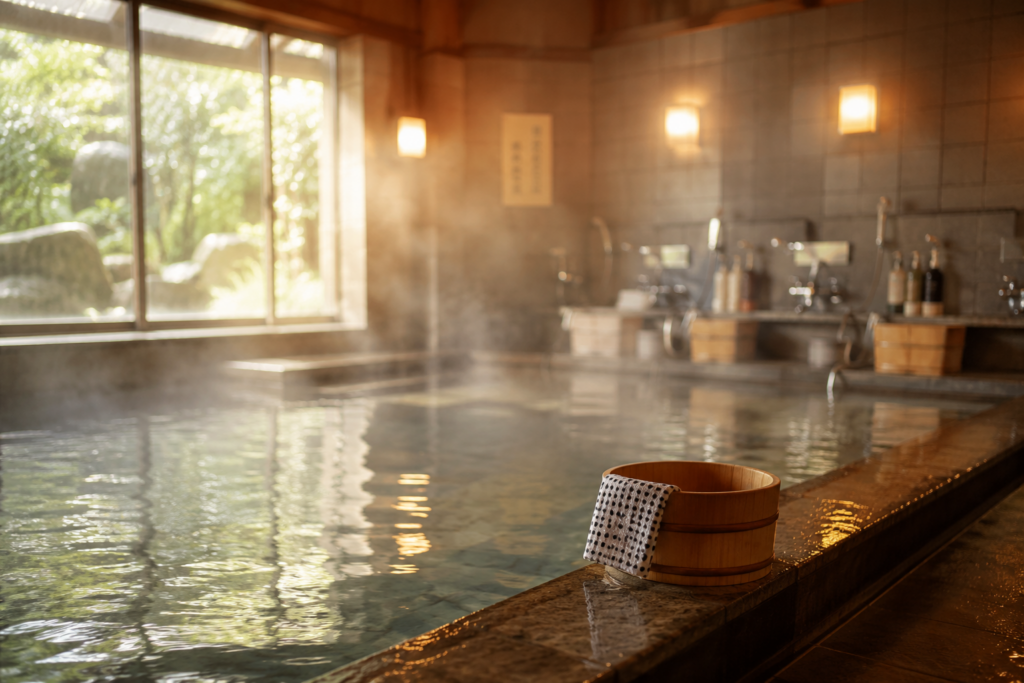
Public Bath Etiquette: A Beginner’s Guide to Onsen and Sento in Japan
If you’re planning a trip or study abroad experience in Japan, a visit to an onsen or sento should be on your list. These baths do more than melt away the day’s fatigue — soaking alongside locals gives you a taste of everyday Japanese culture you won’t find in a textbook. But the customs can feel unfamiliar if you’ve never bathed the Japanese way, so here’s what you need to know before you go.
Onsen vs. Sento: What’s the Difference?
Both are public bathing facilities, but they’re not quite the same thing. An onsen uses natural hot spring water that meets specific legal standards. A sento, on the other hand, is a neighborhood bathhouse people visit as part of daily life — its water isn’t necessarily from a hot spring (though some sento do pipe in onsen water). Whichever you choose, the basic etiquette is the same.
In the Changing Room and Washing Area
Before entering the bath, you’ll undress completely in the changing room — swimsuits aren’t worn in Japanese baths. Store your belongings in a locker, then head to the washing area first. Since everyone shares the same bathwater, washing your body and hair thoroughly before soaking is the golden rule. Be mindful not to splash soap or shampoo onto your neighbors.
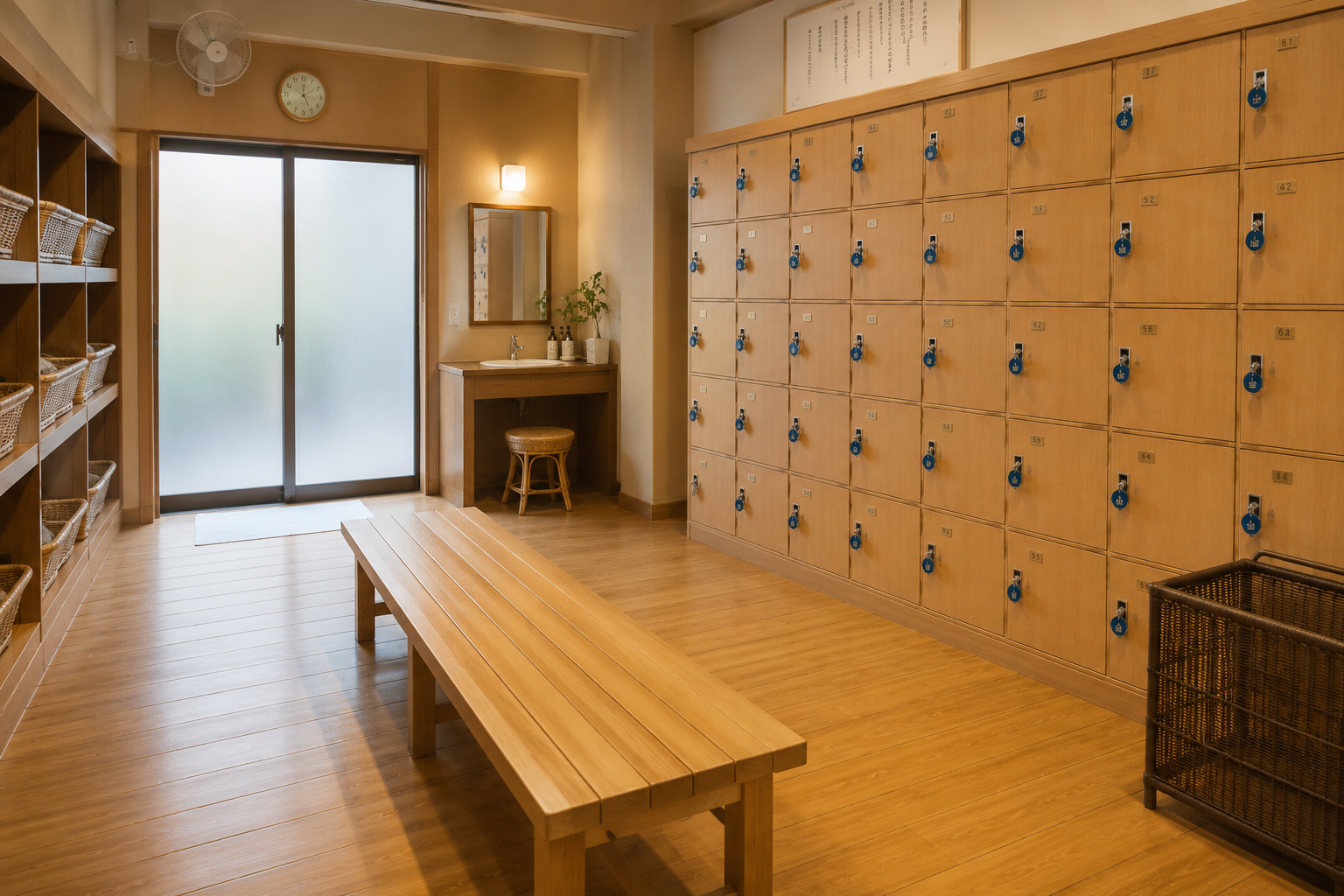
A Japanese-style changing room at an onsen.
In the Bath: Keep It Calm and Considerate
Keep your small washcloth out of the water — rest it on the edge of the tub or on your head instead. Long hair should be tied up so it doesn’t touch the water. Swimming, loud conversation, and splashing are all off-limits, and phones and cameras should stay out of the bathing area entirely.
A Note on Tattoos
Some facilities still turn away guests with visible tattoos, so it’s worth checking a venue’s website or asking at the front desk beforehand. The good news: tattoo-friendly baths are becoming more common, and many places will let you cover a small tattoo with a waterproof sticker instead.
Experience Japanese Bath Culture
Once you know the basics, there’s no need to feel intimidated by your first visit to an onsen or sento. With a little preparation and consideration for those around you, a public bath can be a relaxing way to experience an everyday part of Japanese culture. So when you’re in Japan, why not add a soak to your list and experience it for yourself?